
The irony of the post isn’t lost of me. I wrote it earlier in the week, and last night we had a tree branch go through our roof and into the living room. I will be bolding any edits I make this morning while waiting for the contractor. Here is your regularly scheduled programming:
In true WASP (White Anglo-Saxon Protestant) form, I hate talking about money.
But I love talking about personal finance. Two sides of the same coin, I know. But one is more about theory and much less intrusive. The theory of personal finance has always fascinated me.
When I was in youth group, my dad led a class by Dave Ramsey for teenagers. I was hooked. When I moved to Montgomery I got into podcasts. Dave’s was one of the first I downloaded. This was before I was subscribed to so many shows, so at work I usually got through all three hours. I think I could easily answer most personal finance questions the way Dave would at this point.
He’s all about the baby steps. You can find more about these on here on his website: The 7 Baby Steps – Dave Ramsey
But the steps I want to talk about today are the emergency funds: the $1,000 and the 3-6 months. Lately I’ve been seeing a lot of articles about how many Americans wouldn’t be able to cover a $400 emergency without borrowing or selling something. And that has me concerned for a lot of people out there.
I’m a big proponent of the emergency fund. The day Joel and I moved into our house the cable guy unhooked the old connection box, the neutral line to our house was broken, which caused a huge power surge to tear through our appliances. The fridge, microwave, oven and furnace all had to be repaired (power surges not covered by home warranties FYI). Day one – welcome to home ownership.
We’ve since had to replace the A.C. (only a small portion covered by our home warranty that we had the seller pay for) as well as the water heater (a slightly larger portion paid for by the warranty, but still with out of pocket costs). And we’re currently dealing with a leaky dishwasher. We’ve had this home one year on May 1st.

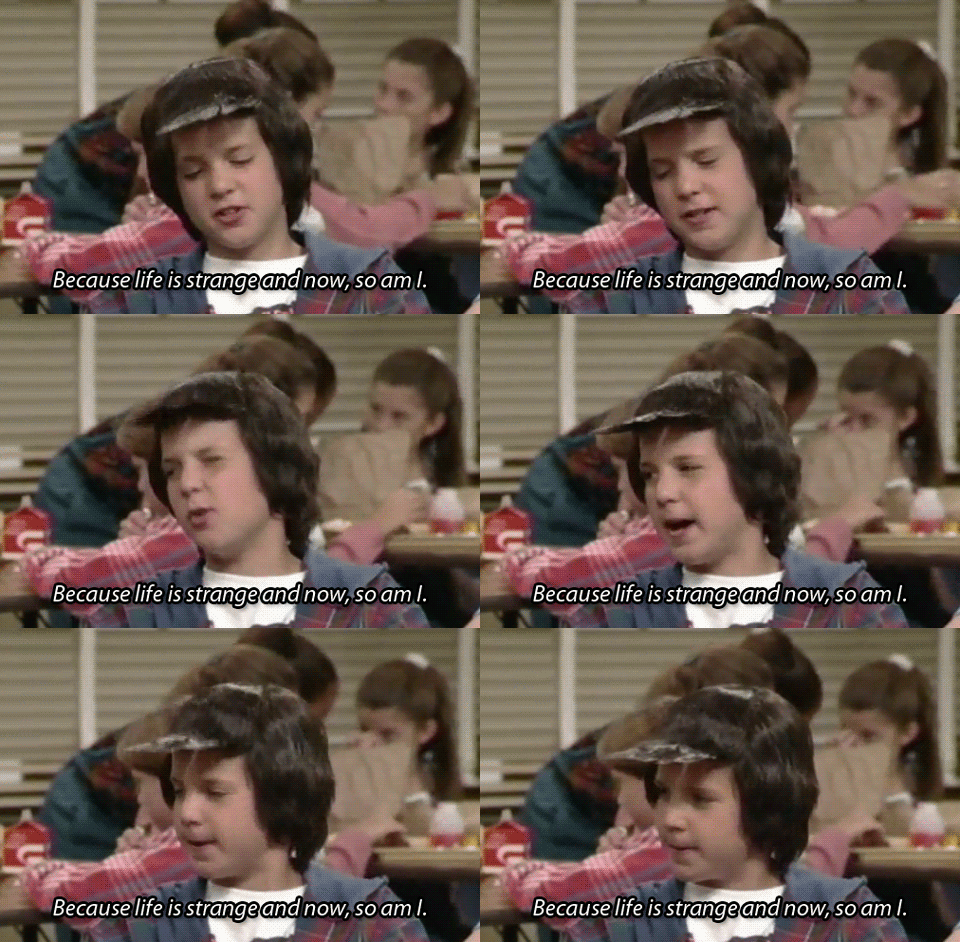
How I would have acted if we didn’t have an emergency fund.
Then this happened last night:
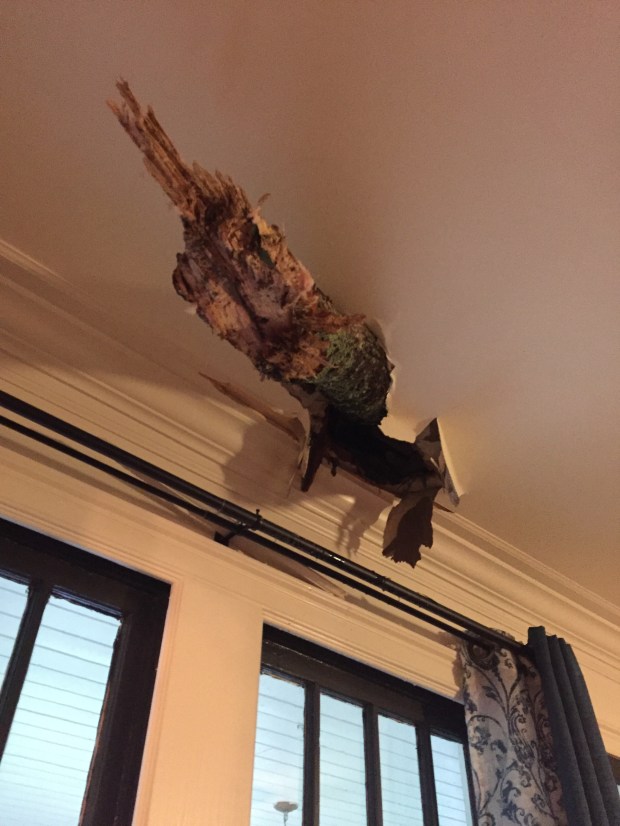

Thats a tree in our living room. The branch snapped off and stabbed through our roof and living room ceiling. For scale, notice 6′ Joel next to the branch on the roof.
So we’ve been grateful for our emergency fund several times this year. And last night – when we had to pay the guy immediately for removing the tree. He didn’t take cards (so no credit), so I wrote him a check. A big check. I was so thankful that we have our emergency fund. We are so blessed to not have any debt other than our mortgage. Joel had minimal student loans, which we paid off in the first couple months of marriage and neither of us had car debt. Our parents are awesome. Plain and simple. But we don’t want to waste the gift they’ve given us by living beyond our means now.
So what’s my favorite tool to stay within my budget?It’s a now old school one: Online banking.
Online banking allows us to have multiple accounts and simply transfer money between them. I’m not talking just a checking and a savings. We have 6 accounts right now. Yes, six and it’s not excessive – we’re thinking of adding another.
The six are as follows:
J&K Checking – This is what our debit cards are linked to. Money either of us spend (all accounts are shared) from daily swipes comes out of this account. We also use this account for cellphone, water, gas and electricity bills. So basically our monthly expenses draw from this account.
House Payment – Out of the first check of the month we deposit the amount of our mortgage payment into this fund. We never have to worry about such a big draft coming out of our daily checking account. We have everything set to automatic, so I make sure the drafts have happened, but I never have to remember when to pay which bill.
Repair Replace and Gift Fund- this is the one we’re currently thinking about splitting into two. Buying a house means maintenance. Owning two cars means maintenance. Lots of Repairing. The Replace should be called “Katelyn wants a new sofa really bad” fund because that’s what we’re saving for right now. The “Gifts” really means Christmas – monthly expenses such as mother’s day or birthdays are cash flowed out of that month’s budget (that’s how we do it at least, budgeting either way makes sense).
Vacation – Here’s where I stray a little from Dave Ramsey. We have a credit card. We use it for convenience, especially on trips. We have never and plan to never carry a balance. Why do I mention this in the vacation fund? Because when we travel we put everything on the credit card and pay it as soon as the charges have cleared from the vacation fund.We don’t have to worry about large holds on our checking account from hotels or car rentals. But we don’t spend more than we have, its just a good way for us to keep up with out of the ordinary spending. If you can’t stick to a budget for your trip though, I suggest keeping it safe and on debit.
Car Fund – we know we’ll have to buy a new car in the next few years. We put a little money aside each month because we know this will be a really big purchase. We won’t use the emergency fund for this – because its not an emergency, we know its coming. Since this large purchase is years away (hopefully) we also don’t use the Repair Replace fund because I’m weak and would see that cash piling up and not think 5 years out and say to myself “ooh all the Restoration Hardware couches and West Elm media stands can be mine today!”. So this is a safety net we’ve set for ourselves.
and finally
The Emergency Fund – right now we have 4 months of current rate monthly spending in the account. If one or both of us were to lose our jobs, we would be able to make it last longer (I’d have to cut out my Target and TJ Maxx trips, but we could do it). This account has fluctuated. It’s taken hits, but its been there for us. We make it a priority to build back up when it takes a beating.
We’ve probably all heard, “Pay yourself first” but if you don’t separate what is going to you and what is going out the door then paying yourself first can lead to irresponsible spending.
So this personal finance post got a lot more about practice instead of theory. I hope that I have been able to make someone evaluate the way they handle their money. To those younger than me out there: get started on the right foot. Don’t fall into all the trappings of credit card debt or car loans.// To the people older than me: its not too late to clean up your financial situation, but it won’t get better until you make it get better. // To those my age: we got this. Start planning for retirement now, and the future won’t be as scary.
Anyone else use multiple accounts or have tips to keep yourself on a budget? I’d love to hear about them! Anyone else interested in more personal finance discussions should check out Personal Finance – Reddit.
Thanks to everyone who checked in on us last night. We really felt a part of this community.





























 Katelyn Talks Too Much